
People were already looking up before anything seemed to have changed.
Around the Cúpula del Matadero, beside the Atlantic, the evening still looked like A Coruña. The sea was there in its usual place. The beaches held their familiar curve. The road, the rocks, the promenade, the bodies moving through the coastal air: all of it seemed recognizably itself. Music moved through the Wake Up Eclipse gathering. People talked, checked the time, lifted phones, lowered them again, adjusted eclipse glasses, and glanced toward a Sun that still felt too bright and ordinary to be part of anything strange.
That was the first oddness of the evening. Everyone knew something extraordinary was coming, but the city had not yet admitted it.
An eclipse creates a rare kind of waiting. It is not like watching a storm arrive from the Atlantic, where the drama announces itself through wind and cloud. It is not like turning a corner and finding a procession, a concert, or a sudden crowd. This was scheduled wonder. The Moon was moving invisibly into position, and thousands of people were aware of time in a very specific way. We were not simply waiting for night. We were waiting for the Sun to be interrupted.
For JSM Cooperative, that waiting belonged naturally to A Coruña Through the Lens. We have spent years photographing, filming, walking, and noticing this city and Galicia around it. Most of the time, a place is remembered through things that seem to stay: buildings, beaches, monuments, streets, neighborhoods, the Tower of Hercules on its headland, the galleries along the Marina, the long line of the Paseo Marítimo.
But some memories attach themselves to a place for the opposite reason. They matter because they cannot be repeated.
The Cúpula remained. The Atlantic remained. The coastline remained. Yet for a short period of time on August 12, 2026, an already familiar part of A Coruña became completely unfamiliar.
Waiting for Something You Know Is Coming
At first, the waiting had a social rhythm. People were not silent. Wake Up Eclipse had the atmosphere of a city event, not a scientific briefing. Music kept the evening from becoming solemn. The crowd had the loose, expectant energy of people who want to be present when a story enters public memory.
Still, almost everyone was measuring the sky.
There is something humbling about watching a predictable event that still feels impossible. The timetable tells you the Moon will move between the Earth and the Sun. The glasses let you look safely. The cameras are ready. The phones are charged. The facts are available. None of that quite prepares the body for the moment when the bright disk begins to lose its certainty.
The eclipse in A Coruña was not only something to understand. It was something to stand inside.
The First Bite
The first photographs in our sequence show the beginning of that transformation. At the start, the Sun still dominates the frame. Then a small portion goes missing. It is almost delicate: a bright circle with one edge quietly taken away.
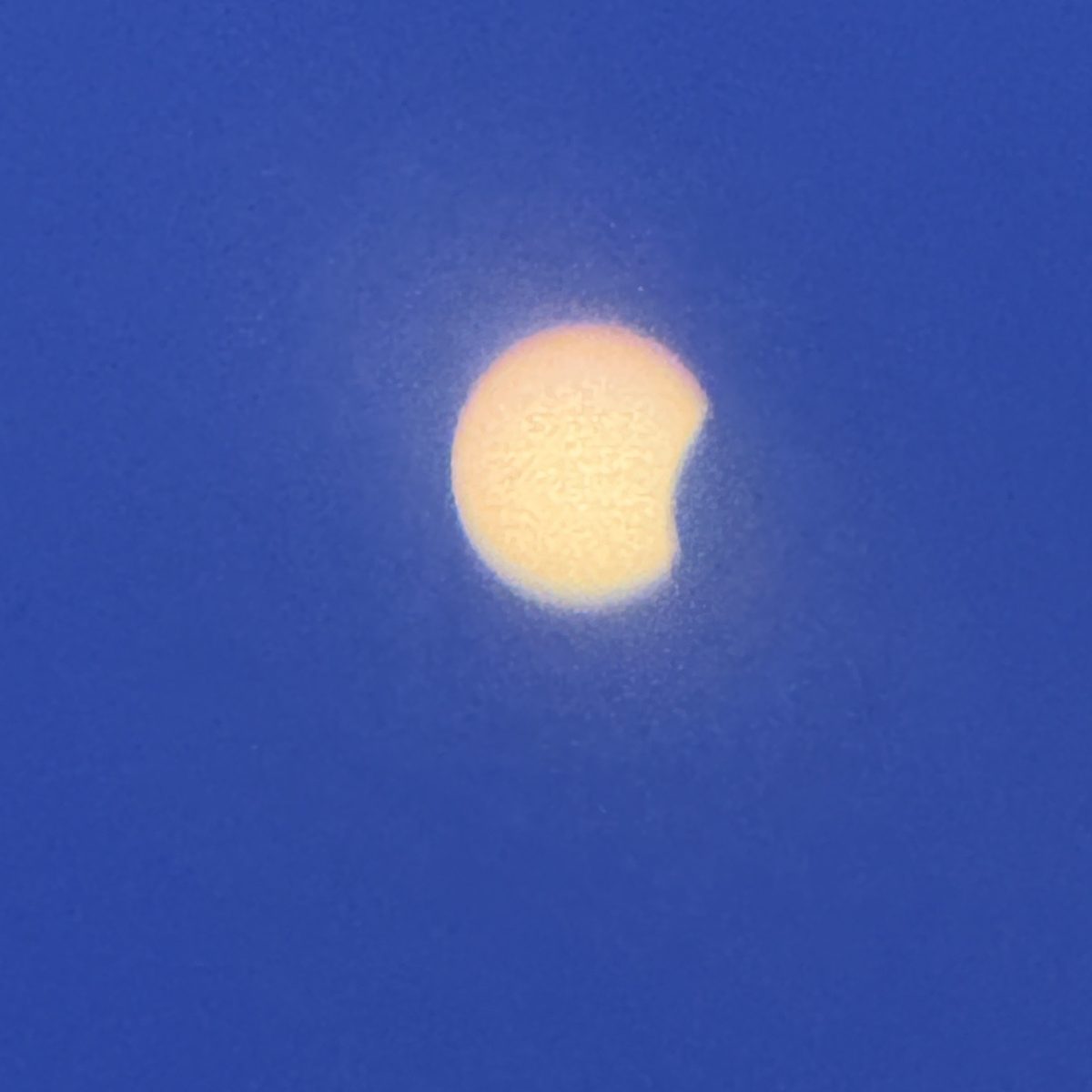
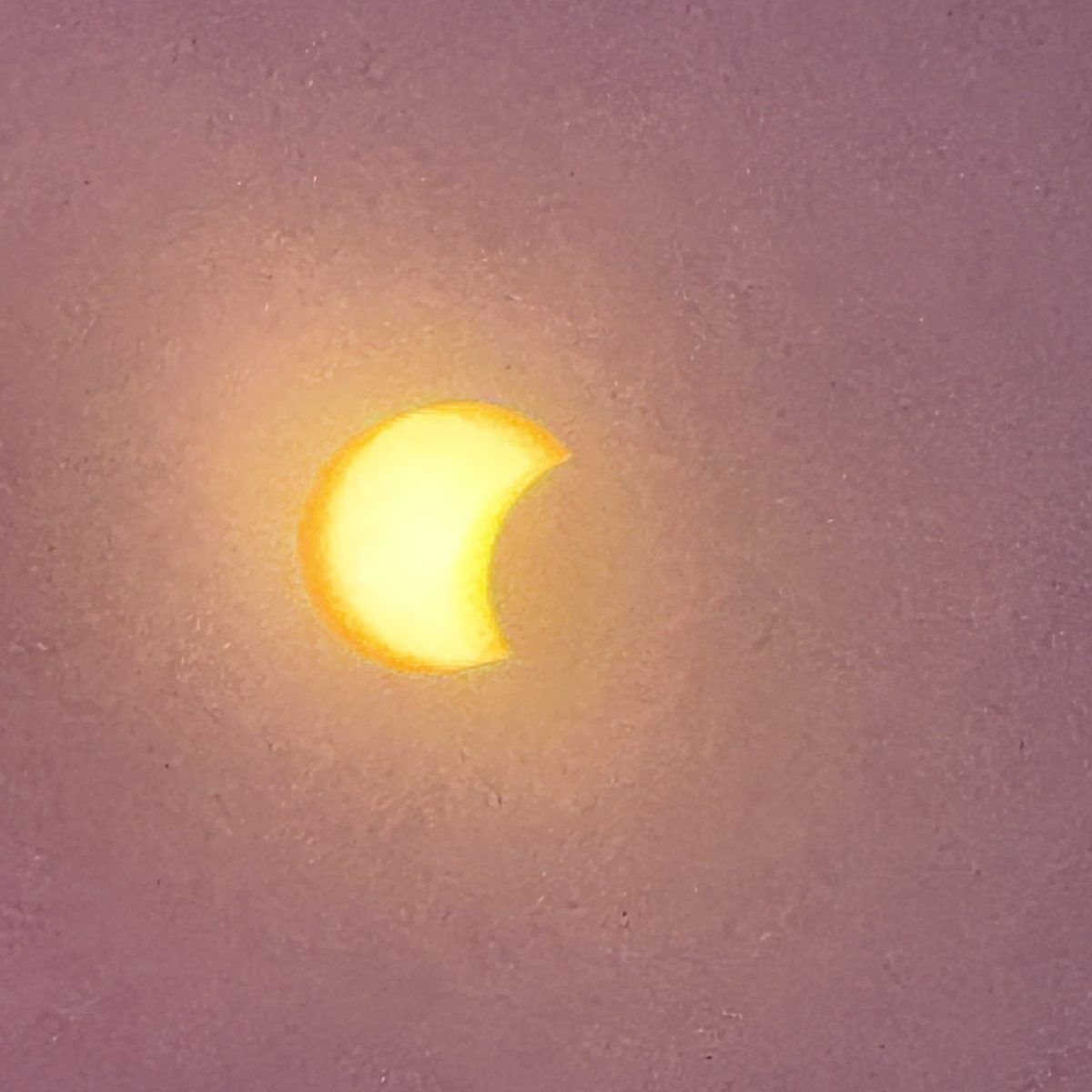
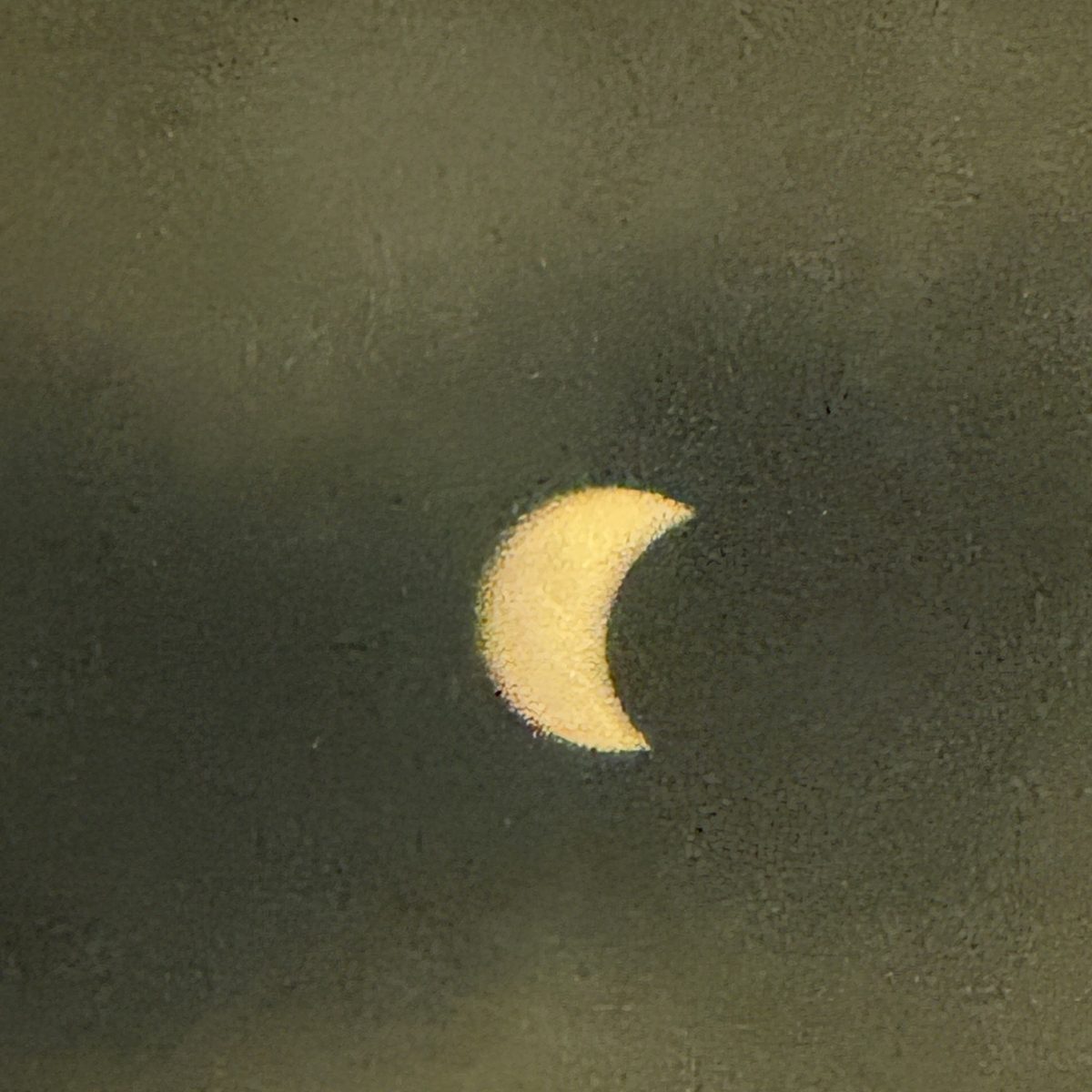
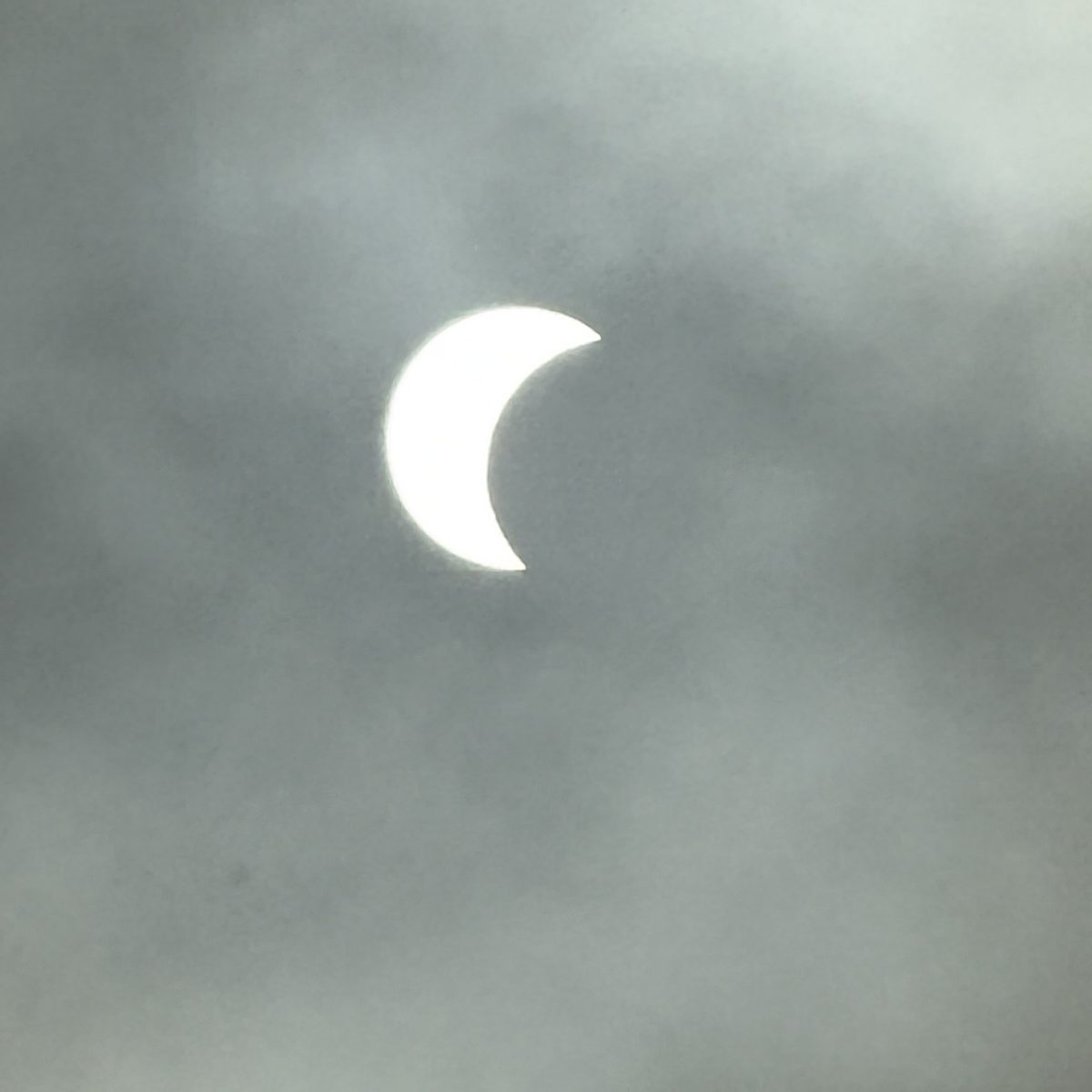
Photographs do something useful here because they slow the event down. In the crowd, the first bite felt both small and enormous. It was only a change in shape, but everyone understood what that shape meant. The Sun had become a clock face. The missing part was time made visible.
People began comparing what they could see through their glasses with what their phones and cameras were catching. Some images came out sharp. Some came out blurred, clouded, strangely colored, or overbright. That variety felt honest. An eclipse is difficult to photograph because it is not only an object in the sky. It is a change in the whole atmosphere of looking.
The Light Starts to Change
An eclipse does not simply make the world darker. Darkness is too blunt a word. What changed around the Cúpula del Matadero was the quality of light.
The evening began to look edited. Clouds seemed to hold more weight. The surface of the Atlantic felt less like background and more like a reflective instrument. Skin tones, concrete, glass, stone, sand, and sea all shifted slightly away from their usual registers. The city did not become night, but it stopped being ordinary day.
That in-between quality was the most cinematic part of the experience. A Coruña often gives photographers strong light: Atlantic glare, wet pavement after rain, white galleries, sunset over Riazor, red lamps along the promenade after dark. This was different. The light did not flatter the city. It unsettled it.
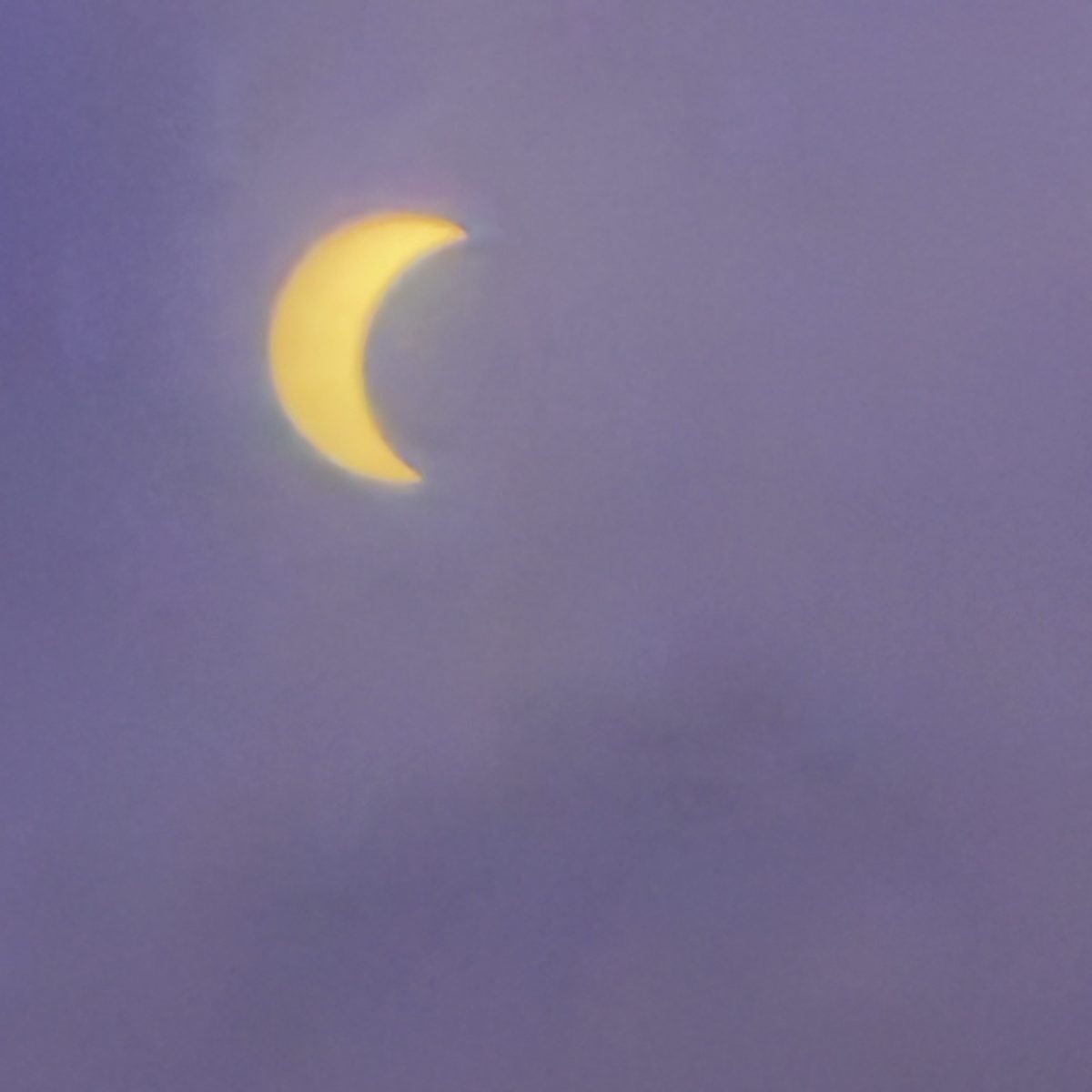
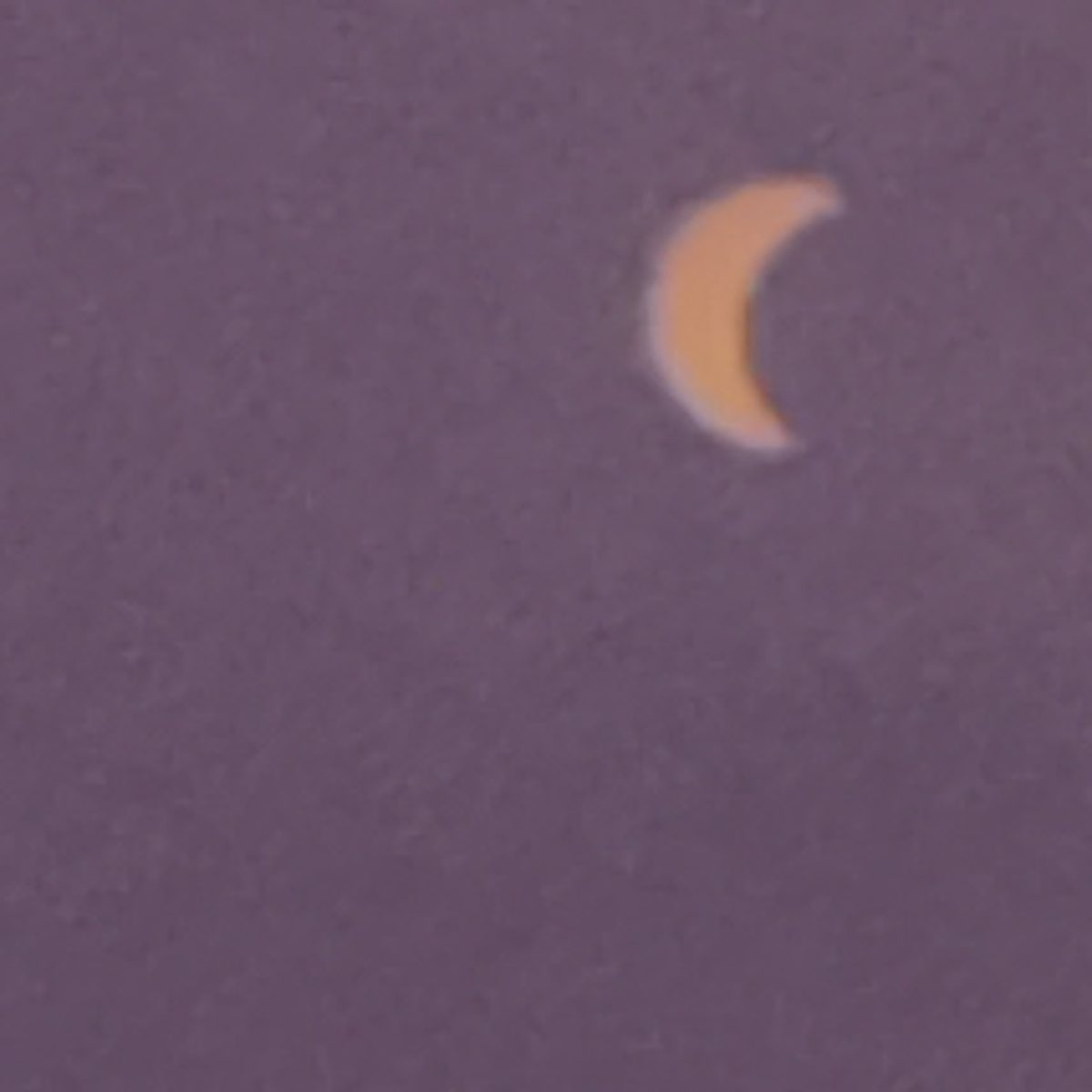
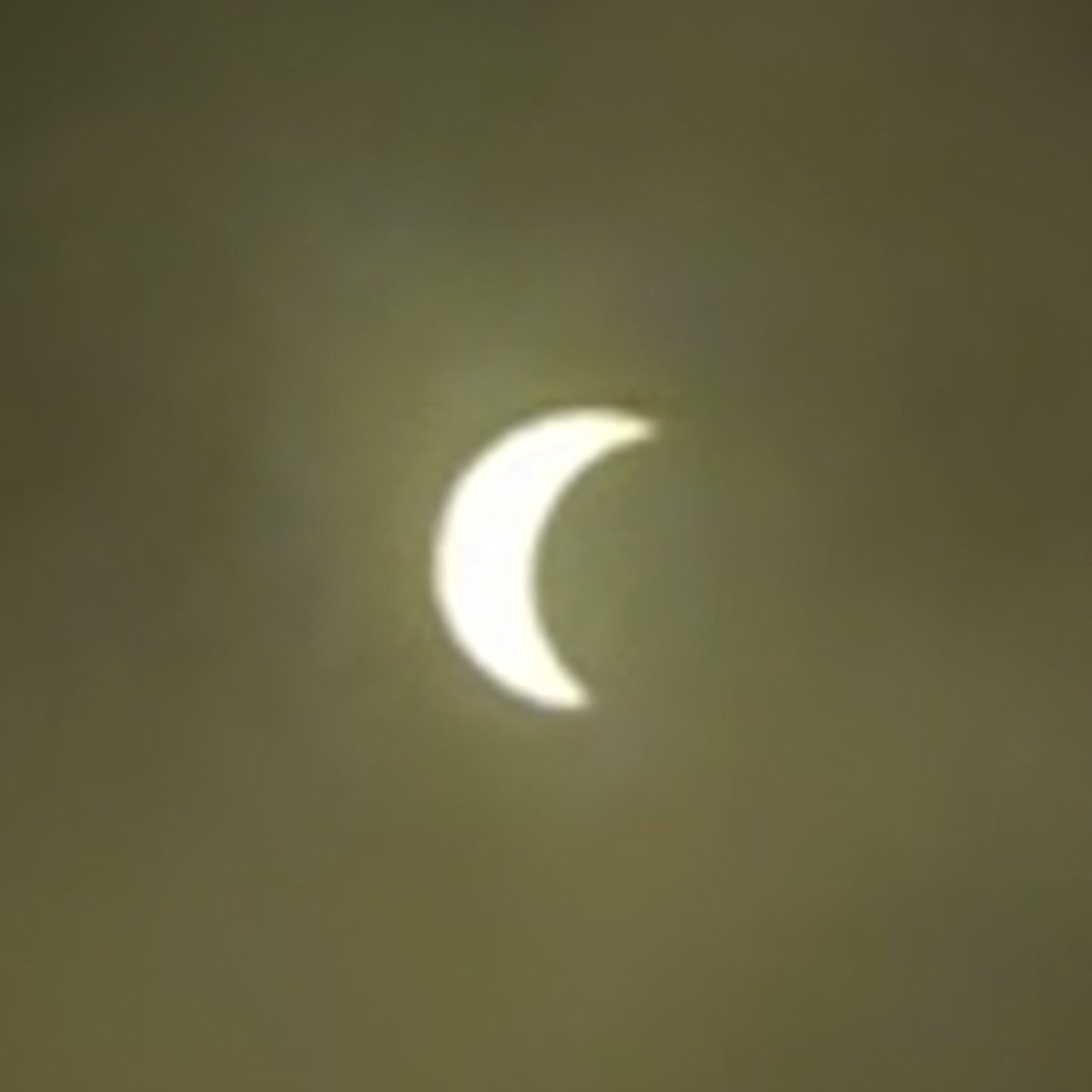
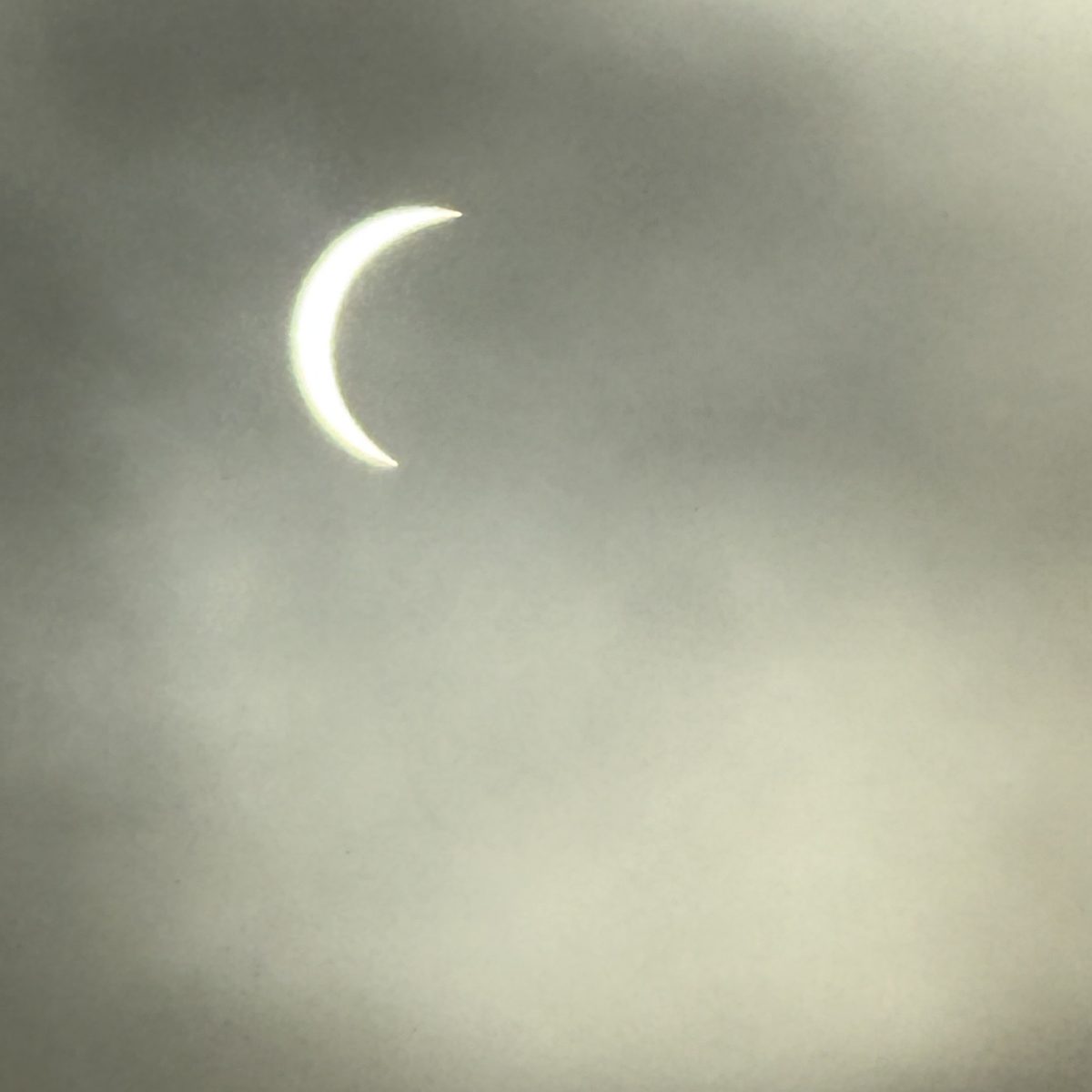
For a few minutes, the familiar city behaved like a place we had arrived in for the first time. The same coastline was there, but it no longer answered the eye in the usual way. The same Atlantic was beside us, but the air around it felt newly charged. The same Cúpula held the crowd, but the crowd had changed too, becoming quieter in pockets, more focused, more unified by a single point overhead.
That is one reason eclipse photography in A Coruña matters beyond the astronomical event. The images preserve a temporary version of place. They do not show only the Moon crossing the Sun. They show the city receiving that crossing.
20:28
Around 20:28, the evening reached its strongest emotional point.
The music was still playing. The Atlantic was still beside us. The crowd was still gathered around the Cúpula del Matadero. And above all of it, the Sun had become a thin, brilliant mark in the sky.
People raised phones. Some cheered. Some laughed in disbelief. Some simply kept looking upward, as if movement might break the spell. For a brief moment, thousands of people were concentrating on exactly the same point in the sky.
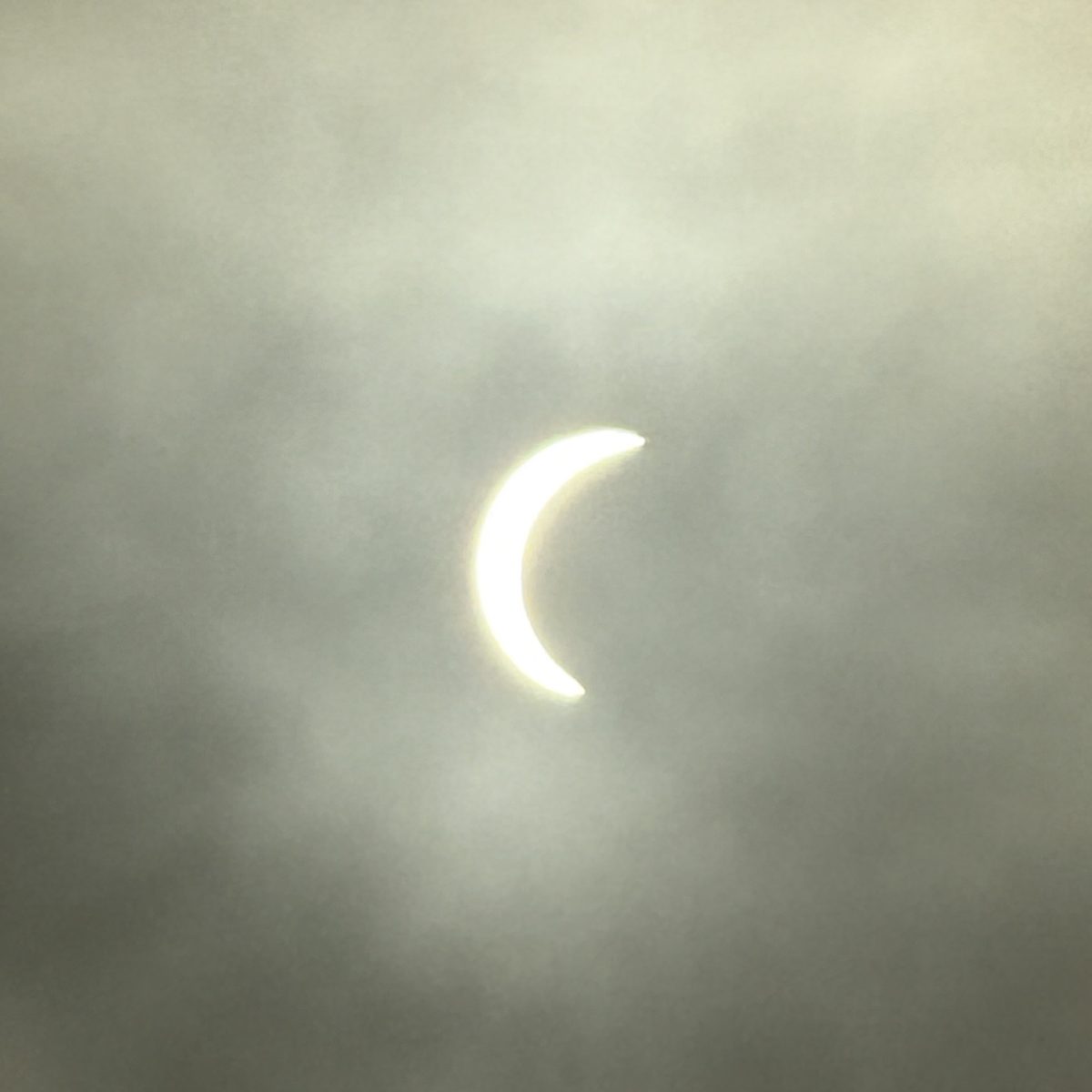
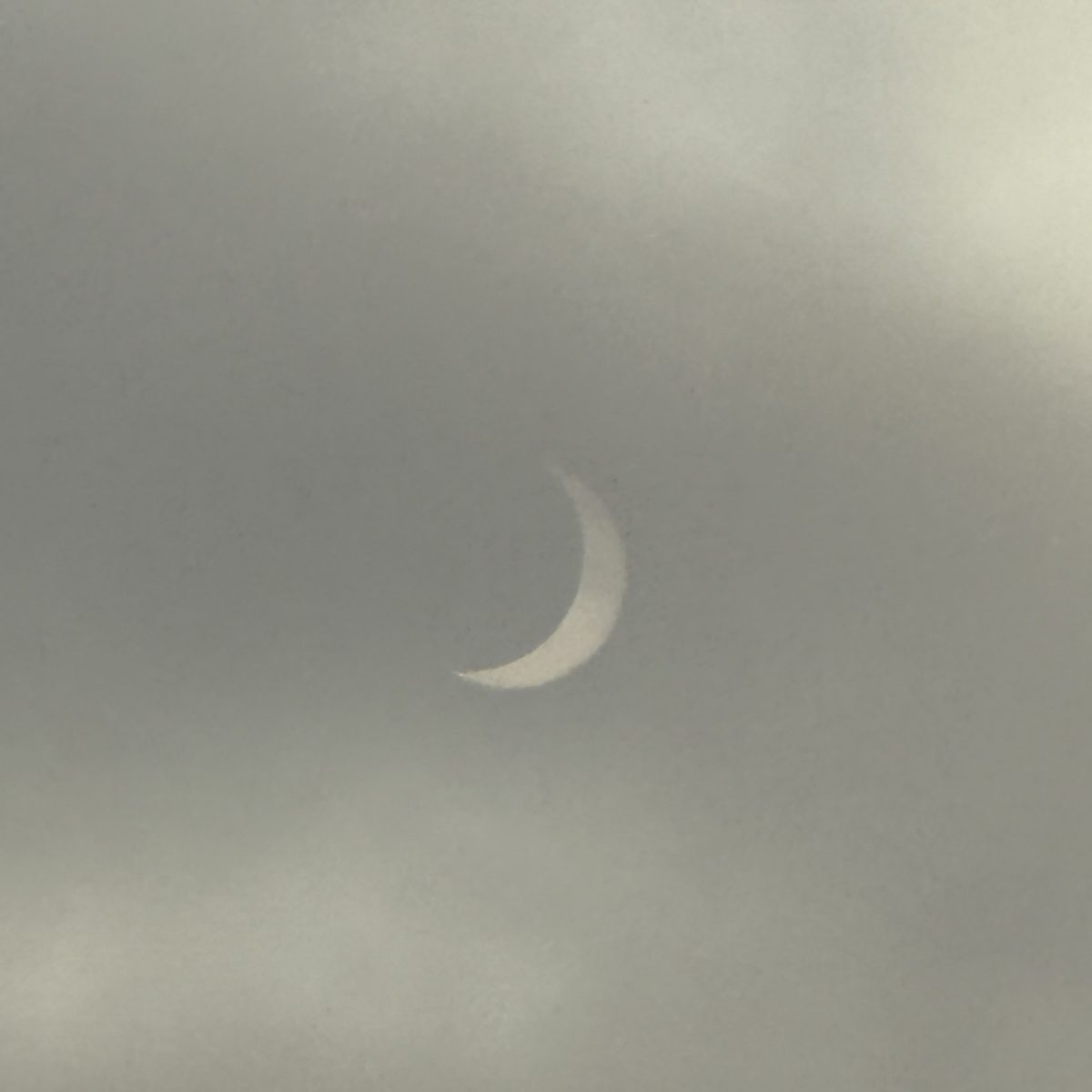
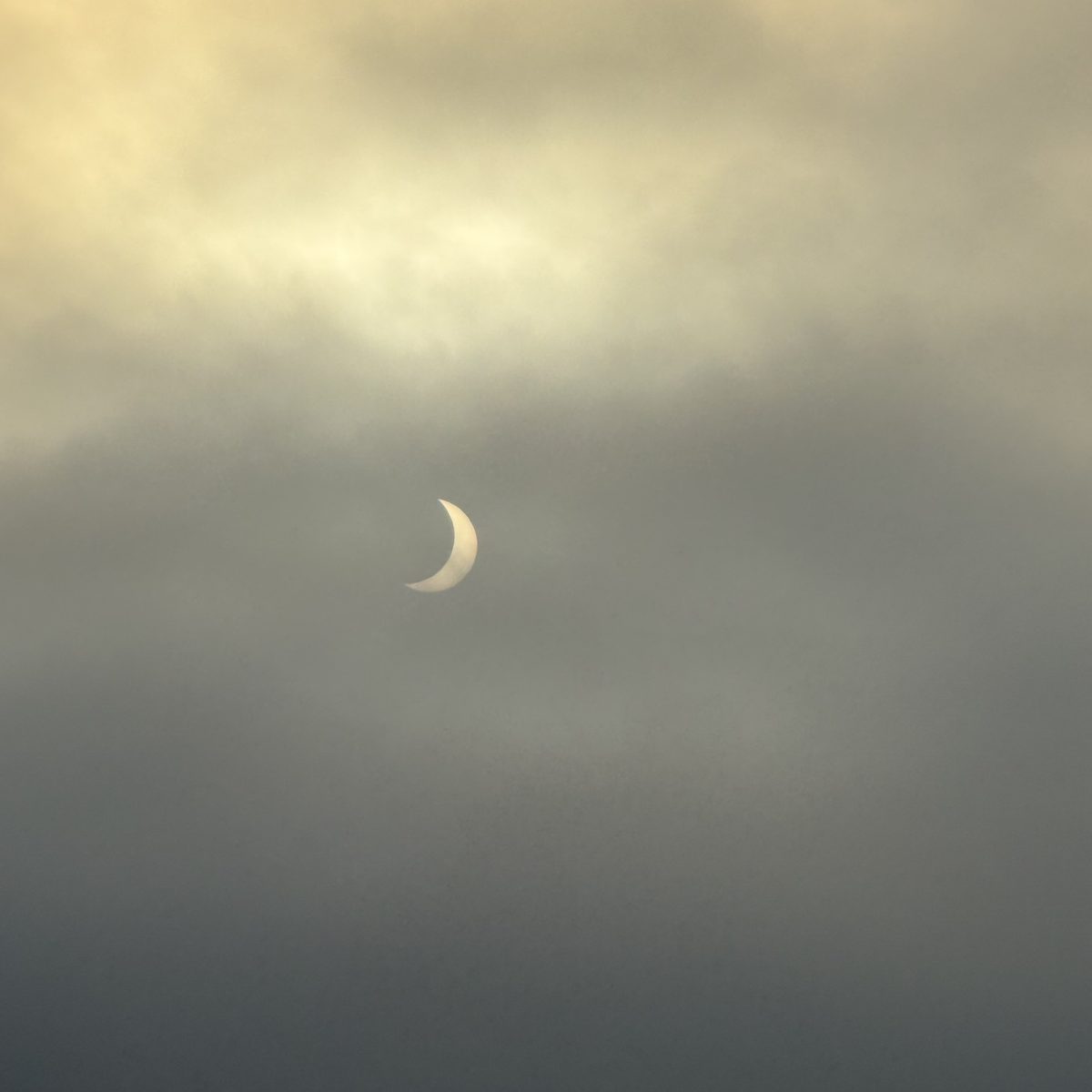
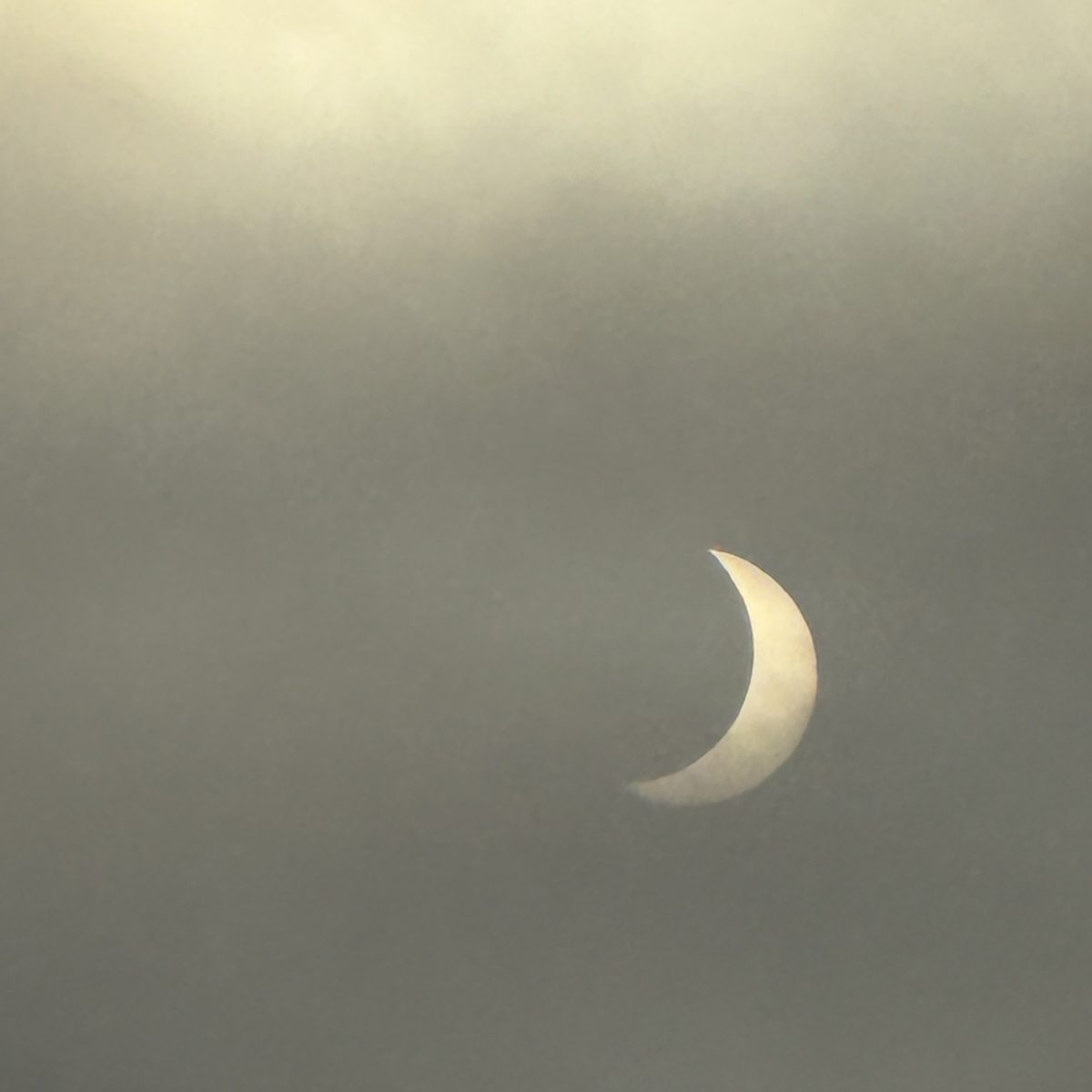
This was the moment when the event stopped feeling anticipated and became memory while it was still happening.
Cities are usually shared unevenly. One person is going home. Another is working. Another is walking a dog. Someone is late. Someone is eating. Someone is thinking about tomorrow. But at 20:28, near the Cúpula del Matadero, A Coruña briefly gathered its attention into one upward gesture.
That shared attention may be what stays with us most.
The Moment We Filmed
Photographs captured the progression. Video captured the reaction.
The JSM Cooperative Reel from Wake Up Eclipse preserves the moving version of the moment: the crowd, the sky, the sound, and the strange public intimacy of watching the eclipse happen together.
The video belongs here because the eclipse was not silent photography. It was bodies, music, voices, phones, glasses, cloud, sea air, and the small shock that runs through a crowd when the expected thing finally becomes real.
After the Sun Returned
Then, gradually, the city began to come back.
Not all at once. There was no curtain lifted, no single instant when normality returned complete. The light moved back by degrees. The phones lowered. People began talking in a different way, with the relief of witnesses. The music continued. The Atlantic kept doing what the Atlantic does. The same coastline that had become strange started to become familiar again.
That return was almost as moving as the eclipse itself.
The strongest memories of place are not always attached to permanence. Sometimes they attach to an interruption. A square is remembered because of one conversation. A street because of one afternoon. A beach because of one color of light. A city because, for a few minutes, it became other than itself.
That is what happened with the solar eclipse in A Coruña on August 12, 2026. It did not replace the city we know. It revealed how much the city can change without moving.
A Coruña Through the Lens
This is why we keep returning to the lens.
We photograph places because they change. Sometimes they change across decades, as neighborhoods evolve, buildings are restored, businesses open and close, and civic memory rearranges itself. Sometimes they change across seasons, as rain, summer, fog, market mornings, night, and Atlantic weather rewrite the same streets. And sometimes they change for less than a minute.
All of those changes are worth preserving.
The eclipse was not only above A Coruña. It happened to A Coruña. It happened to the Cúpula del Matadero, to the Wake Up Eclipse crowd, to the Atlantic edge, to the beaches and clouds and evening light, and to everyone who looked up at the same time.
Continue exploring A Coruña:
For a broader look at how A Coruña shapes our storytelling, read why A Coruña feels made for a mystery or return to the full JSM Cooperative blog archive.
Discover the Story Behind the City
If this eclipse memory makes you think about place, attention, mystery, and the strange power of a familiar city becoming unfamiliar, discover The Man in the Ball Cap, a mystery rooted in Galicia, memory, secrets, symbols, and human motives.
For a few minutes that evening, A Coruña became a city none of us had seen before. And then, almost as quickly, it was gone.